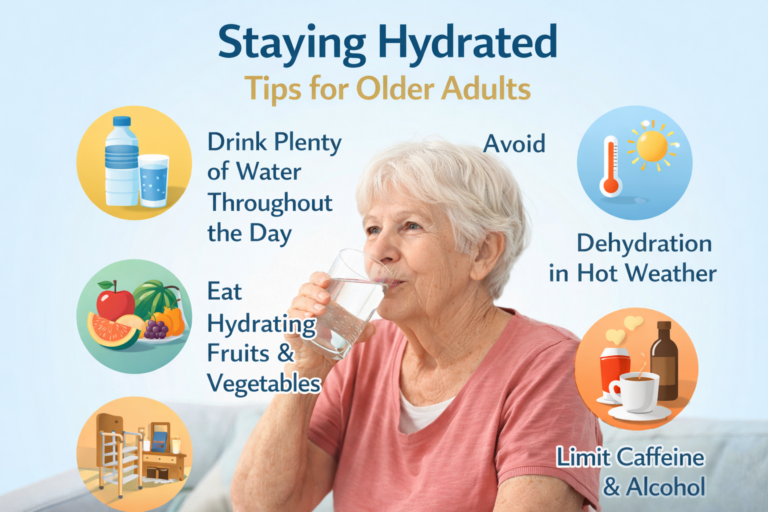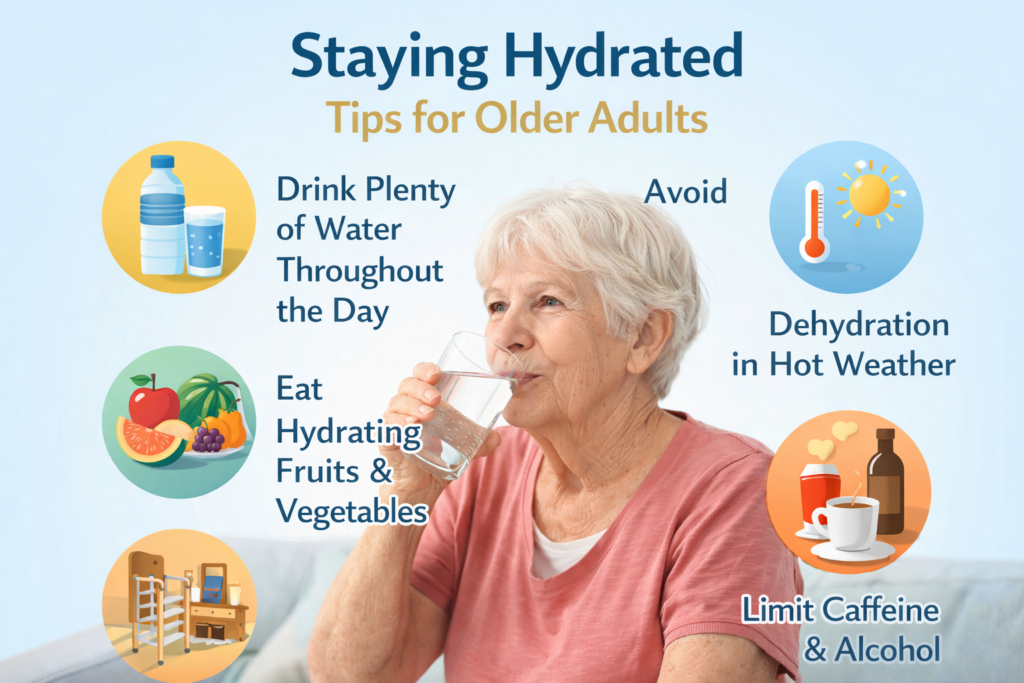
Staying Hydrated: Tips for Older Adults
Staying hydrated for older adults is essential for maintaining overall health, independence, and quality of life. However, many seniors do not drink enough fluids each day, increasing their risk of dehydration. As we age, the body’s ability to sense thirst decreases, making proper hydration more challenging—especially for seniors living at home.
Understanding why hydration matters and how to support healthy fluid intake can help families protect their loved ones and prevent serious health complications.
Why Hydration Is So Important for Seniors
Proper hydration supports nearly every system in the body. For older adults, drinking enough fluids can:
-
Improve energy levels and concentration
-
Support kidney and heart health
-
Prevent urinary tract infections
-
Reduce dizziness and fatigue
-
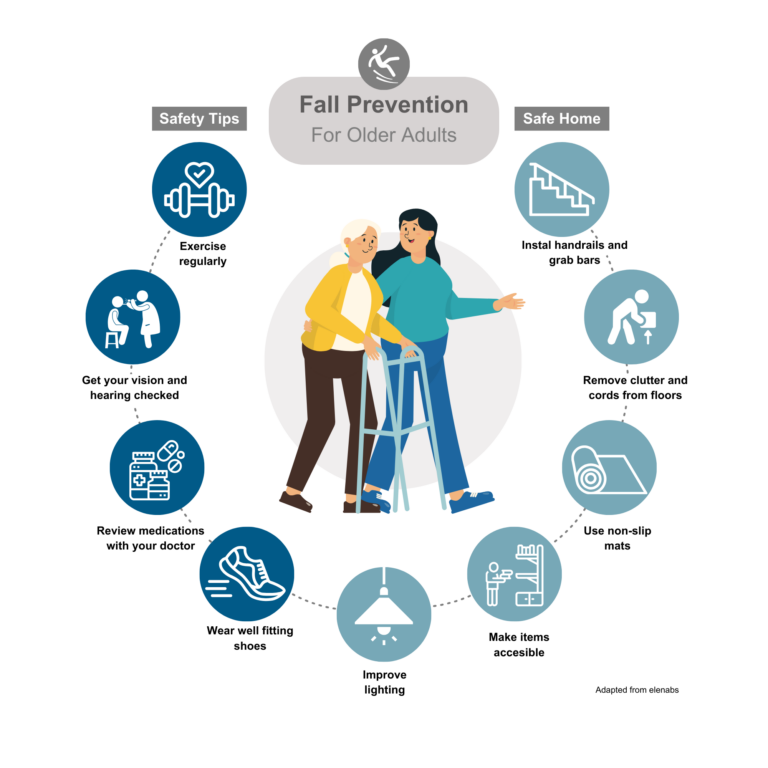
Lower the risk of falls
-
Support digestion and regular bowel movements
Unfortunately, dehydration can develop quickly in seniors and may lead to confusion, weakness, low blood pressure, and even hospitalization if left untreated.
Common Reasons Seniors Become Dehydrated
Several age-related factors can make hydration more difficult for older adults:
-
Reduced sense of thirst
-
Difficulty swallowing
-
Side effects of medications (such as diuretics)
-
Fear of frequent bathroom trips
-
Limited mobility or difficulty accessing drinks
-
Cognitive challenges, including memory loss
Because dehydration symptoms can be subtle at first, it often goes unnoticed without regular monitoring.
Simple Tips to Help Older Adults Stay Hydrated
1. Encourage Small, Frequent Sips
Instead of large amounts at once, encourage seniors to drink small amounts throughout the day. Keeping water nearby makes this easier.
2. Offer Hydrating Foods
Foods like watermelon, oranges, cucumbers, soups, yogurt, and smoothies contribute to daily fluid intake and are often easier to enjoy.
3. Make Drinks Appealing
Flavoring water with lemon, berries, or mint can make hydration more enjoyable. Herbal teas and diluted juices are also good options.
4. Create a Daily Routine
Link drinking fluids to daily habits—such as after waking up, during meals, or while taking medications.
5. Watch for Signs of Dehydration
Common warning signs include dark urine, dry mouth, fatigue, confusion, dizziness, and headaches. Early recognition is key.
How First Support Home Care Helps Seniors Stay Hydrated
At First Support Home Care, caregivers understand how sensitive hydration needs can be for older adults. Our professional caregivers provide:
-
Regular hydration reminders
-
Monitoring for signs of dehydration
-
Assistance with meal preparation and fluid intake
-
Support for seniors with mobility or cognitive challenges
-
Communication with families about changes in health
By offering consistent, compassionate care, First Support Home Care helps seniors remain healthy, comfortable, and safe in their own homes.
Hydration Supports Independence and Safety
Staying hydrated for older adults is not just about drinking water—it’s about preventing falls, maintaining mental clarity, and supporting daily independence. With proper routines and professional support, seniors can avoid dehydration and continue enjoying life at home.
If your loved one struggles with hydration or daily self-care, First Support Home Care is here to help every step of the way.